Showing posts with label Cash Drawer. Show all posts

How to Organize a Cash Register Drawer

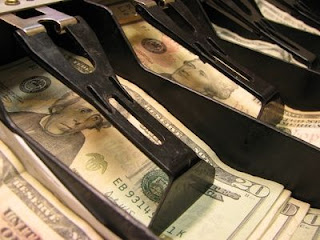
1- Sort the bills by denomination. Arrange each stack of bills so they all face the same direction, with the front of each bill facing up.

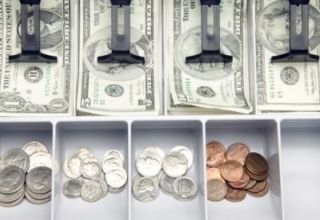
2- Place the stack of 1s in the slot of the cash drawer furthest to the left. Place 5s in the next slot, 10s in the next and 20s in the slot furthest to the right.

3- Place any bills larger than a 20 and all checks received in the compartment beneath the cash drawer.

4- Use paper clips or rubber bands to store bills in larger groups. Group 1s and 5s in sets of $25. Group 10s and 20s in sets of $100. Store the clipped sets in the compartment under the cash drawer.

5- Separate coins by denomination and place each pile in a separate section of the cash drawer. Start with pennies on the far left, nickels next, then dimes and finally quarters on the far right.

There are many situations in which you might find yourself responsible for handling money. Perhaps you work in a business that requires you to run a cash register. Perhaps you are involved in a fundraiser and have been put in charge of collecting donations. Whatever the situation, it is important to keep your cash register drawer organized. It will make it easier for you to make change and to count the money for accounting purposes, and it will help ensure your register balances at the end of the day.

6- Use coin rolls to contain excess coins. Store the coin rolls in the compartment underneath the drawer.

7- Open only one coin roll at a time to make it easier to count the coins at the end of the day.

Tips & Warnings

As you collect money, place the bills facing the same direction in the appropriate section of the drawer to keep it organized.

As you get an excess amount of any particular bill, clip the excess bills together in a set of either $25 or $100 and move it to the compartment under the drawer.
How to Reconcile a Cash Drawer

1- Place a standard amount of cash in the drawer at the beginning of each work day. Set it at the lowest amount that seems feasible to be able to make change for customers. If your business accepts credit and debit cards, you might be able to set this amount fairly low, since many people will likely choose to pay via those methods. If your business is cash-only, you might need to set the beginning cash amount rather high.

2- Make a single cashier accountable for a single cash drawer at a time. If there are multiple people using the same cash drawer at the same time, it will be more difficult to track any potential problems.

3- Count the cash drawer at the beginning of each shift to verify amounts. Print out cash drawer reconciliation slips or keep a notebook where you and your employees can log this information.


If you run or work in any sort of establishment that has a cash register, you will want to learn how to reconcile your cash drawer. This is an important skill for both managers and any staff who will be handling the cash register to have. Managers need to establish a standard set of procedures so that both receipts and employees are properly accountable. Keeping a few things in mind, this should be a fairly simple task.


4- Keep credit card receipts separate from cash receipts. This will make it easier to tally both kinds and make a full report of all receipts at the end of the business day.

5- Count cash in a secluded area, away from the eyes of customers. Tabulate the amount of cash in the drawer, including all coins. If your business accepts checks, these should be counted as well. Log all these amounts. Next, count up the amounts the various receipts say should be there. Make sure they match how much money is actually there. If your business uses a point-of-sale computer software system, it should have these figures easily available for you as well.
 

Tips & Warnings
Balance cash drawers at the end of each shift, not just at the end of each day. Before you or any other employee clocks out, all receipts should be tallied and cash in the drawer counted. Any discrepancies should be noted and reported to management as well. Log all this information on your cash drawer reconciliation slip or notebook for that day.

Make sure to account for any sales that were voided over the course of the day. For instance, if the cashier rang up an item and the customer decided not to buy it, it would have been voided and returned to the sales floor. However, the item will still have made an impact on your cash register. Hopefully, the cashier on duty at the time will have voided it, but this is a good place to check if there are otherwise unexplained discrepancies.


How to Set Up a Cash Drawer

1- Decide how much cash to start the drawer with at the beginning of the day or shift. Many businesses use $250, as it is a relatively low number that still allows for making change. You may wish to start with a higher or lower number based on experience or the nature of your business.

2- Add change and bills to equal your starting amount and place them in the drawer. Only use $20 bills and smaller to make up this amount, as larger bills will rarely be used to make change. A good rule of thumb is to start with a mix of about $30 worth of rolled and loose change in the drawer and at least $100 worth of $1 and $5 bills.

3- Record your starting cash amounts, including the totals for each type of bill and coin. Keep this information in your cash-count log for future reference.

How to Set Up a Cash Drawer


4- Remove excess cash from the cash register at the end of every shift or whenever you reset the register for bank deposits. Repeat this procedure on a schedule to get an idea of how your cash levels vary over time. Make sure to leave the starting amount of cash at the end of each period.

5- Use your bank bag and get change early. Don't wait until you run out of change to make a run to the bank for change. Try to always have at least one roll of each coin on hand at all times.

Tips & Warnings
Keep rubber bands or paper clips in your cash register and clip large stacks of bills together for easy counting. Counting three stacks of twenty-five $1 bills is much faster than counting all seventy-five bills.
Counting the cash drawer should be done by the manager or another trusted person in the business. Optimally, if one person is responsible for using the cash drawer, the manager should count the drawer in front of them to verify the counts and contents of the drawer.

How to Balance a Cash Drawer Every Day

1- Create a cash reconcilement form. At the top of the form, leave a space for your name or the name of your employee and the date. On separate lines list each type of bill, from $1 up to $100. List each type of coin, from one penny to one dollar. Include another line under the coinage for "other" currency, such as commemorative coins issued in unusual increments. Create a line for checks, money orders and any other forms of payment that the business accepts. Leave lines for the drawer's cash total and overall total underneath the other forms of payment.
At the bottom of the form create two signature lines: one for the person balancing the drawer and another for a second employee to sign if he audits the drawer. Photocopy the form and distribute copies to all employees on a regular basis.

2- Count the money in the cash drawer at the beginning of the day. Sort cash into the correct denominations. To make counting easier, turn the bills so all of them face the same way, with the president's face on the top side. Count each denomination separately, and record the sum total of each type of bill and coin in the relevant sections of the form. Use a calculator to add up the total, and write the total in the appropriate box. If you have any checks or money orders, add them up and list them on the form.

3- After closing for the day, print out a daily transaction report from your computer, point-of-sale machine or teller system. Many machines automatically print out the final total of the day's cash and check balances, adjusted for any cash back or change given out. If your report does not list the total, you must add up all of the cash transactions you received on a calculator and deduct the total of cash that you gave out. Do the same for checks and money orders. Add the final cash amount to the cash balance you had in the drawer at the start of the day.

How to Balance a Cash Drawer Every Day


4- Count the cash and checks that you have in the drawer and write the totals on a new cash reconcilement sheet. Compare the total with the amount you added together by combining your beginning balance with the day's total cash and check intake. If the totals match, sign the form. If the totals do not match, ask a co-worker to recount your money and check your receipt tape for errors.
If you find an error, correct the cash reconcilement form. If you cannot locate an error, you must charge the loss to the business or the employee. If you transfer money to a vault, write the total amount deducted on the end-of-day reconcilement form, and have a co-worker sign the form to verify that the transaction occurred.

5 - Staple beginning and ending cash reconcilement sheets together, and keep the forms on file for 12 months so you can look for trends and have information on operating losses readily available at tax time.

Tips & Warnings
    Many businesses balance cash drawers several times a day to detect any errors as early as possible. This practice works well when training new employees but can become problematic if it takes a long time and large numbers of customers are left waiting in line while it takes place.
    Most financial institutions require supervisors to conduct surprise audits on teller cash drawers on a monthly or quarterly basis. If you notify employees about audits ahead of time, you allow workers committing theft to cover their tracks.

How to Wire a Cash Drawer

A cash drawer is a rectangular container or compartment designed to hold money underneath a cash register. Whenever someone enters a cash sale into the computerized cash register, a computer or printer opens the cash drawer electronically. A cash drawer keeps the money secure by opening only when a cash sale triggers the cash register program. Installing the wires needed to connect a cash drawer to the computer and a power supply is an easy and straightforward task.

Instructions :

1-  Hold the USB cable supplied with the cash drawer, and plug it into an available USB port at the back of your computer. If you have a serial cable instead of a USB cable, plug the serial cable into a serial port at the rear of the computer.
  
How to Wire a Cash Drawer

   2-   Plug the USB cable into the USB port behind the cash drawer. If you're using a serial cable instead, plug it into its corresponding serial port at the back of the cash drawer.


  3-      Hold the power cord supplied with the cash drawer and plug it into the electrical connector behind it. Install the software that came with the cash drawer. Read the owner's manual and configure the settings of the cash drawer in the cash register program. Plug the power cord into a wall outlet. Test the cash drawer by ringing up a cash sale.


How to Set Up a Cash Drawer

Properly setting up a cash drawer is an important aspect of any retail business. A poorly configured cash drawer can be a real problem when it comes time to make change for a customer or tally up the day's totals. Taking a few minutes to set up a cash drawer properly and creating procedures to keep it that way can eliminate many problems.
Instructions

 1-    Decide how much cash to start the drawer with at the beginning of the day or shift. Many businesses use $250, as it is a relatively low number that still allows for making change. You may wish to start with a higher or lower number based on experience or the nature of your business.

2-     Add change and bills to equal your starting amount and place them in the drawer. Only use $20 bills and smaller to make up this amount, as larger bills will rarely be used to make change. A good rule of thumb is to start with a mix of about $30 worth of rolled and loose change in the drawer and at least $100 worth of $1 and $5 bills.

3- Record your starting cash amounts, including the totals for each type of bill and coin. Keep this information in your cash-count log for future reference.

How to Set Up a Cash Drawer


4- Remove excess cash from the cash register at the end of every shift or whenever you reset the register for bank deposits. Repeat this procedure on a schedule to get an idea of how your cash levels vary over time. Make sure to leave the starting amount of cash at the end of each period.

5- Use your bank bag and get change early. Don't wait until you run out of change to make a run to the bank for change. Try to always have at least one roll of each coin on hand at all times.

Tips & Warnings :

    Keep rubber bands or paper clips in your cash register and clip large stacks of bills together for easy counting. Counting three stacks of twenty-five $1 bills is much faster than counting all seventy-five bills.

    Counting the cash drawer should be done by the manager or another trusted person in the business. Optimally, if one person is responsible for using the cash drawer, the manager should count the drawer in front of them to verify the counts and contents of the drawer.


Manual Cash Drawer

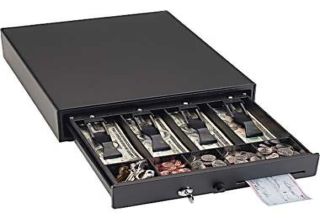
A manual cash drawers will keep your money safe, with plenty of register inserts offered for easy access and great business security.
Adding a manual cash drawer to your business can be the best way to get the best of both worlds when you’re looking to provide a more convenient system for keeping your cash safe. These are special types of drawers that enable you to open them manually as need be, but that also enable you to connect them to a register for automatic operation. That makes for a more convenient system to ensure that your cash is always available. But of course, you want to pick the right type, so that you have the most ideal manual cash drawer to allow you total protection, yet total control of the way that your business handles money. This means you’re going to want to think about the type of security and usability that you’re looking for, so that you can find the perfect drawer for you.

The way that most manual cash drawer models work is fairly similar. They all feature heavy duty construction that makes them heavy to carry, as well as difficult to open without the right key. They are almost impossible to cut or break, making them worthless for thieves to steal. But what’s more, they are also extremely secure, so that you can guarantee nobody without a key will ever have access to your store’s cash. Plus they have the added convenience of a special connective port on the back of the box, which can be connected to literally any type of register, or even computer with register software. It’s just a matter of finding the right type to use with your business.

A manual cash drawers will keep your money safe, with plenty of register inserts offered for easy access and great business security

The main concern is always going to be security, and you want a manual cash drawer that guarantees your money is safe. For that reason, you can find types that actually have an alarm that triggers every time the box is opened using a key. This way, you know when someone is accessing the drawer, even if they have a key, so that you can be sure nothing suspicions is going on with your drawers. That can help you better manage your money, without having to restrict emergency access for employees if you’re having a problem with theft.

A manual cash drawers will keep your money safe, with plenty of register inserts offered for easy access and great business security

But if you’re just looking for something that’s easy to use, there are also manual cash drawer models that are ideal for that purpose as well. You can find fantastic drawers that can be opened with the touch of a button giving you instant access to your money inside. This can even enable you to actually perform transactions without the use of a register at all. You can simply use the cash box to protect your money, and you can ensure that you can keep the money safe through every single transaction, with the handy locking box.

There are a variety of different places where you can buy manual cash drawer models as well, and it really just depends upon the type that you’re looking for. Usually the best places to shop are always going to be stores like OfficeMax or Staples, as they have a variety of different types of business supplies, and are guaranteed to have just what you need for any retail purpose. There you can find any type of manual cash drawer, whether you’re looking for something secure to keep your money safe, or something that’s more accessible and easier to use.